Planning a trip to the Middle East has become easier with online visa applications. Saudi Arabia, Qatar and the United Arab Emirates (UAE) offer electronic visa services that allow eligible international travellers to arrange entry permission before departure.
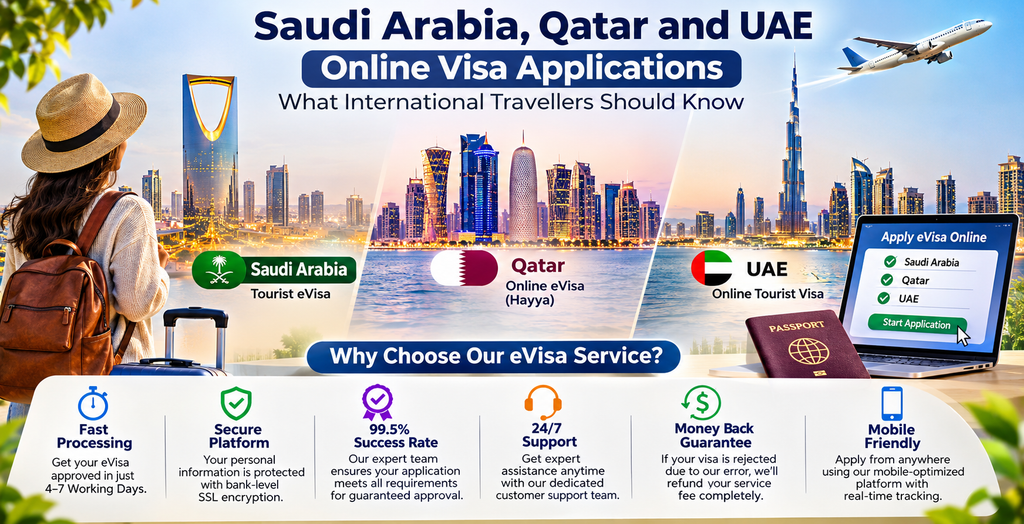
However, each country has different visa rules, document requirements and application procedures. Understanding these differences can help you avoid mistakes, reduce delays and prepare for a smoother journey.
1. Saudi Arabia Online Visa Application
Saudi Arabia welcomes international visitors for tourism, family visits, events and Umrah outside the Hajj season. Eligible travellers can apply for a Saudi tourist eVisa online instead of visiting an embassy.
Documents Required for Saudi Arabia eVisa
Applicants generally need:
- A passport valid for at least six months from arrival.
- A recent passport-sized photograph.
- A valid email address.
- Personal and travel information.
- Accommodation details.
Before submitting your application, check the Saudi Arabia eVisa document requirements to prepare clear passport copies and suitable photographs.
Eligible tourist eVisas generally allow multiple entries over one year, with a maximum stay of 90 days. Eligibility and conditions depend on the applicant's circumstances.
2. Qatar Online eVisa Application
Qatar attracts visitors with its modern architecture, cultural attractions, shopping centres and international events. Many nationalities qualify for visa-free entry, while others must obtain travel authorisation before arrival.
Qatar's Hayya platform provides several electronic visa categories, including:
- A1 Tourist Visa: For eligible international tourists.
- A2 GCC Resident Visa: For qualifying Gulf Cooperation Council residents.
- A3 Visa with ETA: For travellers meeting specific nationality or residency conditions.
How to Apply for Qatar eVisa Online
Travellers can review the Qatar eVisa online application process to understand registration, document uploads, payment and application updates.
Applicants should confirm their visa category, passport validity and accommodation requirements before applying. Approved electronic visas can generally be accessed digitally.
3. UAE Online Visa Application
The UAE is a popular destination for holidays, business meetings and family visits. Dubai, Abu Dhabi and Sharjah offer attractions ranging from modern skyscrapers to traditional markets.
Depending on nationality, travellers may receive visa-free entry, a visa on arrival or require an advance tourist visa.
Steps to Apply for UAE eVisa
- Check your nationality's entry requirements.
- Choose the appropriate visa category.
- Prepare your passport, photograph and supporting documents.
- Submit the application through an authorised channel.
- Pay applicable charges and monitor the application.
- Download the approved entry permit when issued.
For additional instructions, explore how to apply for a UAE eVisa online.
UAE visa applications may be handled through government portals, authorised airlines, hotels or licensed travel agencies.
4. Common Online Visa Application Mistakes
Small errors can create unnecessary complications. Before submitting any application, travellers should check passport numbers, spelling, travel dates and uploaded documents.
Avoid booking non-refundable arrangements before understanding the applicable visa conditions. Apply early enough to allow for additional document requests or unexpected processing delays.
5. Why Choose an eVisa Assistance Service?
Professional eVisa assistance can make travel preparation more convenient, especially for first-time applicants.
Depending on the provider, useful services may include secure document submission, application reviews, mobile-friendly forms, status tracking and customer support.
Always check service charges, refund conditions and processing estimates before paying. Private assistance providers are separate from government immigration authorities, and visa approval cannot be guaranteed.
Conclusion
Saudi Arabia, Qatar and the UAE have made international travel more accessible through digital visa systems. Still, entry requirements differ according to nationality, travel purpose and visa category.
Checking official immigration rules, preparing accurate documents and submitting applications well before departure are the best ways to make your Middle East journey more organised and enjoyable.
Comments