West Africa has much more to offer than busy cities and beautiful beaches. Hidden across Ivory Coast, Benin, Burkina Faso and Togo are tropical forests, impressive waterfalls, rocky mountains and peaceful natural landscapes. These destinations offer opportunities for hiking, wildlife watching, photography and exploring local communities.
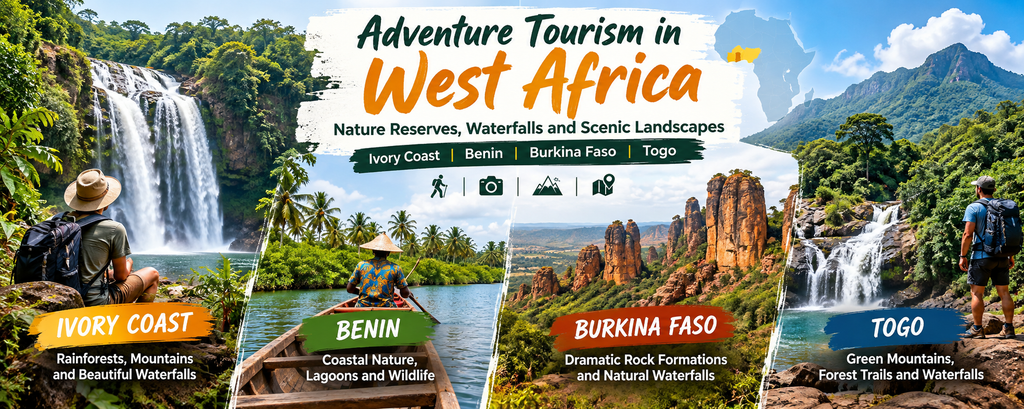
For travellers who enjoy nature and outdoor activities, these four countries reveal a different side of Africa. However, some northern parks and remote regions currently face serious security risks, so checking official travel advice is an important part of planning.
1. Ivory Coast: Rainforests, Mountains and Beautiful Waterfalls
Ivory Coast, also known as Côte d'Ivoire, is an exciting destination for nature lovers. The country has dense tropical forests, coastal landscapes and mountains that attract adventurous travellers.
Taï National Park: Explore Tropical Rainforests
Taï National Park is one of West Africa's important remaining tropical rainforest areas. It is home to rare wildlife, including chimpanzees and pygmy hippopotamuses.
Visitors interested in conservation can learn about rainforest ecosystems and wildlife protection. Access to forest activities should be arranged through authorised local operators, depending on current conditions.
Man Waterfalls and Mountain Scenery
The city of Man in western Ivory Coast is surrounded by green hills and impressive rock formations. The Cascades de Man and nearby Mount Tonkoui are known for their natural scenery.
Travellers can enjoy mountain views, photography and guided walks in accessible areas. Conditions vary during the rainy season, when slippery paths require extra care.
Before planning these outdoor experiences, international visitors can explore the Apply Ivory Coast Tourist eVisa information to understand the travel document options available for their nationality.
2. Benin: Coastal Nature, Lagoons and Wildlife Habitats
Benin offers a fascinating combination of coastal ecosystems, wetlands and protected natural landscapes. Its southern regions are particularly interesting for visitors who enjoy peaceful outdoor activities.
Grand-Popo: Discover Mangroves and Lagoons
Grand-Popo is a beautiful coastal town surrounded by sandy beaches, lagoons and coconut trees. The nearby Mono River flows through wetlands before reaching the Atlantic Ocean.
One of the most memorable experiences is taking a traditional boat trip through the mangroves near Bouche du Roy. Visitors can observe local birdlife, discover fishing communities and enjoy the scenery where the river meets the sea.
Pendjari National Park: An Important Wildlife Reserve
Pendjari National Park is historically one of Benin's most important wildlife conservation areas. Its savannah landscapes provide habitats for elephants, antelopes, lions and many bird species.
Important: Pendjari and W National Parks are currently covered by serious official travel warnings because of terrorism and kidnapping risks. They should not be treated as suitable tourist safari destinations under present conditions. Travellers seeking nature experiences should consider appropriate alternatives in southern Benin.
Visitors preparing for a trip can review How to Get Benin eVisa information before making travel arrangements.
3. Burkina Faso: Dramatic Rock Formations and Natural Waterfalls
Burkina Faso is known for its distinctive rock formations, savannah landscapes and cultural heritage. Some of its most impressive natural attractions are located around Banfora.
Karfiguéla Waterfalls: Beautiful Natural Cascades
The Karfiguéla Waterfalls, also called the Banfora Cascades, are among the country's well-known natural landmarks. Water flows over several rocky levels, creating a remarkable landscape surrounded by vegetation.
These waterfalls have long attracted visitors interested in nature photography and outdoor exploration.
Sindou Peaks: Unusual Rock Landscapes
The Sindou Peaks are famous for their tall, narrow sandstone formations shaped by natural erosion over a long period. The surrounding landscape offers striking examples of the region's geological history.
Another notable attraction is the Domes of Fabédougou, where rounded rock formations create an unusual scenic landscape.
Travel safety: Burkina Faso is currently subject to official warnings against all travel from several governments because of terrorism, kidnapping and political instability. These locations are included for geographical and educational interest, not as recommendations for travel at present.
Anyone researching future entry arrangements can review the Burkina Faso eVisa Document Requirements and confirm applicable rules with official authorities.
4. Togo: Green Mountains, Forest Trails and Waterfalls
Togo is a relatively small West African country, but its landscapes change dramatically between the southern coastline and the central highlands.
Kpalimé: A Popular Destination for Nature Lovers
Kpalimé is surrounded by green hills, forests and coffee and cocoa plantations. Its mountain scenery makes it an attractive destination for hiking, photography and learning about local agriculture.
Travellers can explore accessible walking routes with knowledgeable local guides and experience the area's peaceful natural surroundings.
Womé Waterfall and Mount Agou
Womé Waterfall, near Kpalimé, is one of the region's scenic attractions. It is surrounded by vegetation and is best visited with local advice about trail conditions.
Mount Agou, Togo's highest mountain, is another notable destination. The surrounding highlands offer panoramic scenery and opportunities to discover traditional villages.
Travellers should check route access, local weather and regional safety information before organising any hikes.
Before departing, international tourists can check Togo eVisa Eligible Countries Online to learn about nationality-based entry requirements.
Best Time to Explore West Africa's Natural Attractions
The best travel season depends on the country and activity. Generally, the drier months offer more comfortable conditions for walking and road travel, while rainy periods bring greener landscapes and stronger waterfall flows.
November to March is often a useful starting point for planning outdoor activities in many parts of the region. However, weather patterns differ between coastal areas, forests and northern savannahs.
Travellers should also confirm local access, accommodation availability and current security conditions before making reservations.
Essential Tips for Adventure Travellers
- Check travel advisories: Avoid regions affected by terrorism, kidnapping or conflict.
- Hire experienced local guides: Local knowledge helps with routes, weather and access restrictions.
- Carry suitable equipment: Comfortable walking shoes, drinking water, sunscreen and insect repellent are useful.
- Respect wildlife: Never approach or feed wild animals.
- Protect natural areas: Avoid littering and follow conservation rules.
- Prepare travel documents: Check passport validity, eVisa eligibility and health requirements before departure.
Conclusion
Ivory Coast, Benin, Burkina Faso and Togo contain some of West Africa's most interesting natural landscapes. From the tropical rainforests of Ivory Coast to Benin's coastal wetlands, Burkina Faso's remarkable rock formations and Togo's green mountains, each country has its own natural character.
Adventure tourism is not simply about visiting famous attractions. It also involves understanding local environments, supporting communities and travelling responsibly. With careful planning and attention to current safety advice, travellers can discover suitable experiences that showcase West Africa's natural beauty.
Comments